
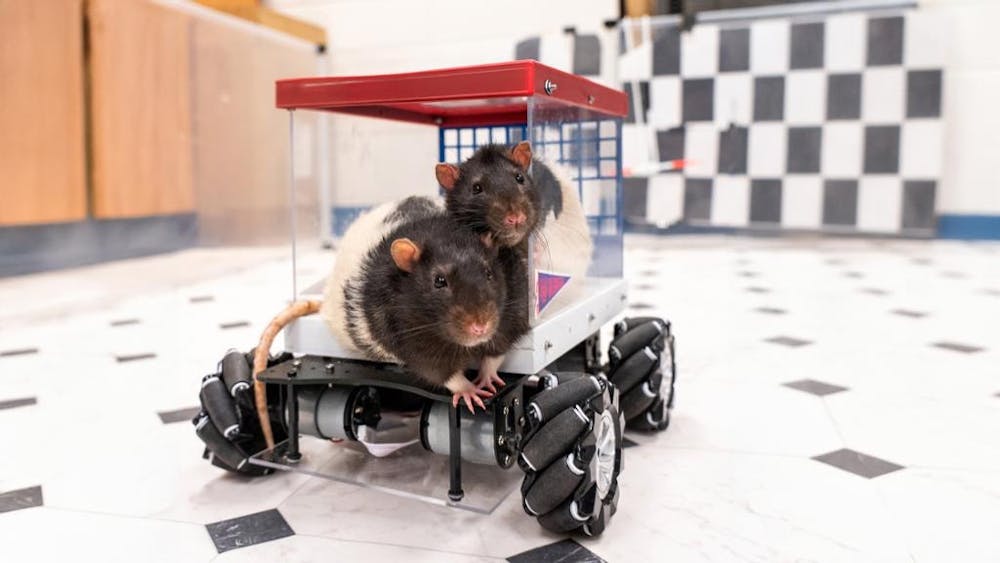
Inside a tucked-away wing of the Gottwald Science Center, the hum of filtration systems and the glow of stacked aquatic tanks fill a maze of research rooms: the habitat for hundreds of animals under study. The facility is the center of UR’s expanding biomedical research efforts and the workplace of the first full-time specialist hired to care for them.
Jamie Wagner was hired in September 2024 as the University of Richmond’s animal care specialist. Wagner comes from exotic veterinary medicine, working in radiology, as well as a surgery technician for different wildlife. Now she oversees the university’s vertebrate species from zebrafish in the biology labs to rats in behavioral neuroscience studies, and also ensures the university complies with federal animal-research regulations.
“It’s the first time the university has had someone in this role,” Wagner said. “In the past, all of the teachers were responsible for the animals. Now there’s a central person making sure we’re following federal guidelines and that the animals get consistent, high-quality care.”
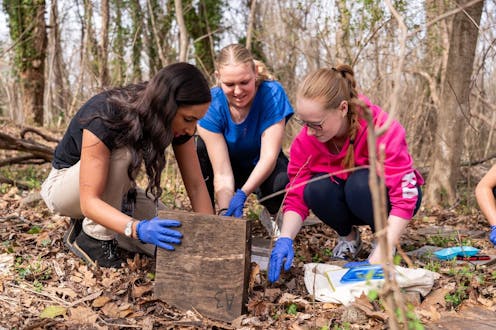
Students during a field lab, which Wagner frequently assists. Photos courtesy of Jamie Wagner, taken by Jamie Betts.
Wagner oversees daily operations inside UR’s animal facility, including feedings, husbandry, water quality checks and clinical and behavioral monitoring. She also frequently assists classes with field labs, such as salamanders on the Buttermilk Trail, or observing historic rock pools at Belle Isle.
Inside the lab, Wagner oversees the university’s two main biomedical research species: rats and zebrafish, the latter of which she calls “the underdogs of biological research.”
“One thing we’re really big on is enrichment; that’s a huge part of animal care,” she said. “The better care the animal models receive, the better results we get in the research.”
Wagner’s animal care is especially visible in the zebrafish facilities, where labs led by biology professor Isaac Skromne and assistant professor in biology Colleen Carpenter-Swanson use zebrafish to learn more about conditions ranging from bone disease to neurological disorders.
Zebrafish share about 70% of their genes with humans, making them a tool for pharmacology and genetics research, as well as being fairly inexpensive and easy to maintain. Unique to these fish are their transparent embryos that develop in two to three days. Since a lot of the research is done at the embryonic level, Wagner said no harm is being caused.
The next-door neighbors to these two-inch aquatic creatures are the rats, which are used for research and labs conducted by Kelly Lambert, a professor of behavioral neuroscience in the psychology department. Lambert’s lab uses rats as preclinical mammalian models to study psychiatric and cognitive health, emotional resilience, parenting behavior, and learning and memory.
“We call them preclinical models to try to understand psychiatric illness and mental health and well-being, so that we can dig a little deeper into the neurochemicals and neurobiology that we can't do with human models,” she said.
Senior Braden Wixted is in Lambert’s lab and did summer research on campus in 2024. For eight weeks, he was training 36 rats every day with positive rewards, like Froot Loops for picking through a sunflower seed, and randomizing the routine of activities for the “UPER” group of 12 rats, which stands for “unpredictable positive experience responses.”
Enjoy what you're reading?
Signup for our newsletter
The ninth and final week before sacrificing them, the rats had a “swim test,” which was used to determine how they deal with stress and coping.
“Rodents have some very similar systems to us,” Wixted said. “They have stronger olfactory systems, they have similar brain areas that are very important, that if we do these drug studies and test or enriched environments, we might see similar impacts in humans.”
Wagner also trains every student who works with the animals on campus, from animal care assistants to research students. That includes federal compliance training, hands-on animal handling, tank maintenance, health monitoring, and breeding protocols.
“We don’t have a lot of pre-vet opportunities on campus, so I’ve been trying to build that,” she said. “Students learn everything from machine operation to clinical symptom monitoring.”
One of the student animal care assistants at the university, senior Jillian LoCurto, conducts brief physical examinations multiple times a week, feeds the animals, cleans the cages, monitors the pH and temperatures in the tanks, and even crossbreeds the zebrafish and monitors the embryos. Two to three times a week, LoCurto also helps train rats to drive, following the protocol established by Lambert’s lab.
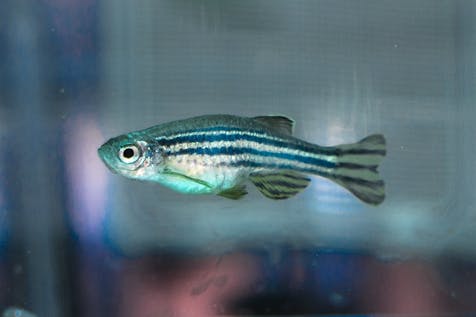
Wagner oversees the university’s two main biomedical research species: rats and zebrafish, the latter of which she calls “the underdogs of biological research.” Photos courtesy of Jamie Wagner, taken by Jamie Betts.
“As a pre-veterinary student, this helps me gain familiarity with laboratory veterinary medicine and how important animals are in biomedical research,” LoCurto said.
This is LoCurto’s first experience with laboratory animals and biomedical research in general. Since working as an assistant for 10 months, she has gotten more comfortable handling the animals being used for research purposes, as well as meeting the visiting veterinarian.
“I think what’s really special about it is how passionate everyone is about it and dedicated to the animal welfare of all the animals used,” LoCurto said. “The teamwork between the professors, Jamie, the animal care assistants, and the research students allows for so many different helping hands in ensuring the quality of the animals is the best it can possibly be.”
Outside the university, Wagner is a member of the American Association for Laboratory Animal Science , the national organization that certifies laboratory animal technicians. She also participates in the Animal Care and Use Program, a group that evaluates legislative changes affecting animal research. Additionally, following federal regulations and compliance, and ethically conducting research is a huge part of Wagner’s job and passion, even outside of the university.
“We [ACUP] follow every bill or act being proposed,” she said. “Whether it's the House, Senate or if it is going through Congress, we will meet to discuss on what we want to do to educate these legislators on why it is so important that we are still using animal models.”
Richmond is required to secure approrequired to secure approval from its Institutional Animal Care and Use Committee before conducting any work involving vertebrate animals — a mandate set by federal law and enforced by local institutions. The Animal Welfare Act and the Public Health Service Policy require care and use committees to review every animal research protocol, monitor compliance and ensure humane treatment. Universities, including UR and Virginia Commonwealth University, follow these federal standards, require specialized training for researchers and face penalties for violations.
Although the work is expanding, Wagner said public understanding remains limited. Looking ahead, she hopes to change that through new outreach opportunities, such as hosting Biomedical Research Awareness Day on campus in the spring.
“Not many people know what we do. Sometimes students don’t even realize we have animals,” Wagner said. “We love what we do, and we love to talk about it. We’re here to educate.”
Contact contributing writer Juliet Zucker at juliet.zucker@richmond.edu
Support independent student media
You can make a tax-deductible donation by clicking the button below, which takes you to our secure PayPal account. The page is set up to receive contributions in whatever amount you designate. We look forward to using the money we raise to further our mission of providing honest and accurate information to students, faculty, staff, alumni and others in the general public.
Donate NowRead More

OPINION: UR needs to limit noise on the IM fields
By Rosalie Hinke | 8 hours ago
